
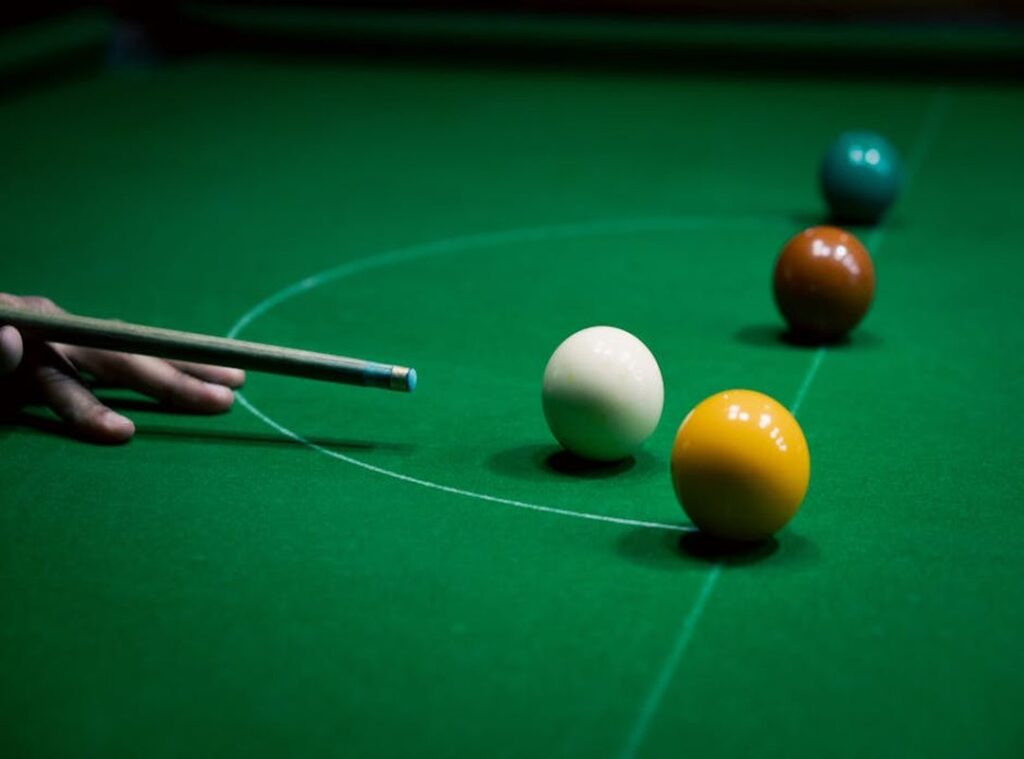
The satisfying sound of a clean break and the perfect scatter of red balls is like music to any snooker player’s ears. But let’s be real, that perfect break is impossible without a precise and correct snooker arrangement.
This article is here to give you a definitive, step-by-step guide to setting up a snooker table perfectly every single time. By the end, you’ll be arranging the balls with the confidence of a seasoned player.
A proper setup ensures a fair start and is the first step in mastering the strategic depth of the game. Trust me, it makes all the difference.
Mapping the Table: Understanding the Baulk-Line and Critical Spots
Before you start, it’s crucial to understand the key geography of the table. This will help you set up correctly and play more effectively.
The Baulk-Line and the ‘D’ are at one end of the table. This is the starting area. It’s where you begin your game, and it’s essential for setting up the initial break.
Now, let’s talk about the six crucial spots for the colored balls. The Black Spot is closest to the top cushion. The Pink Spot is at the apex of the triangle.
The Blue Spot is in the exact center of the table. These spots are non-negotiable for a correct setup and for re-spotting balls during play.
On the Baulk-Line, there are three more spots. The Brown spot is in the middle. The Green spot is to the left, and the Yellow spot is to the right (when viewing from the baulk end).
Knowing these spots is critical for the susunan snooker and for maintaining the flow of the game.
Understanding these positions isn’t just about following the rules. It’s about playing smarter and more strategically. When you know where each ball should be, you can focus on your shots and tactics, rather than worrying about setup errors.
A Step-by-Step Guide to Placing the Coloured Balls
Setting up the susunan snooker table correctly is crucial for a fair and enjoyable game. Let’s break it down step by step.
Place the Black ball on its spot. It’s the highest value, so it goes first.
Next, position the Pink ball on the spot below the black. This marks the point of the triangle of reds.
Place the Blue ball on the center spot of the table. This is a key position, so make sure it’s right.
Move to the Baulk-Line. Place the Brown ball on the middle spot of the line. This is where things can get a bit tricky.
Finally, place the Green and Yellow balls on the left and right spots of the Baulk-Line, respectively.
To help remember the Baulk-Line order, use the mnemonic: “God Bless You” (Green, Brown, Yellow, read from left to right).
Now that you have the setup, you might wonder, what’s next? Practice makes perfect. Spend some time getting familiar with the layout.
It’ll make your game smoother and more enjoyable.
Racking the Reds: How to Build the Perfect Triangle

When it comes to setting up the susunan snooker, getting the reds right is crucial. First, gather all 15 red balls and place them inside the triangle rack.
Make sure the reds are packed as tightly as possible, with no gaps. This tight packing allows for a good split on the break.
To tighten the pack, tap the triangle and push it forward gently.
The entire triangle of reds should be positioned below the Pink spot.
One critical rule: the apex ball of the triangle should be as close to the Pink ball as possible without actually touching it.
By following these steps, you’ll set up a perfect triangle that gives you the best start in your game. If you’re new to the sport, mastering the basics like this can make a huge difference. For more on building a solid foundation, check out the beginners guide to strength training with proper form.
Common Setup Mistakes and How to Easily Avoid Them
Let’s talk about the most frequent error: a LOOSE RACK. This results in a ‘dead’ break where the balls don’t split well. Always tighten the rack until it feels solid.
Another common mistake is misplacing the Baulk-Line colors. Remember the ‘God Bless You’ mnemonic to keep them in the right spots. It’s a simple trick that can save you from a lot of frustration.
The apex red touching the Pink ball, and that’s a foul. Make sure to leave a paper-thin gap.
It’s crucial for a fair and legal setup.
Placing the triangle upside down or not aligning it with the Black spot can lead to a crooked setup. Always double-check the alignment before breaking.
Using a ball marker is important if a colored ball’s spot is occupied by another ball during play. It helps maintain the integrity of the susunan snooker and keeps the game flowing smoothly.
From a Perfect Setup to Your First Break
Quickly summarize the core sequence: Baulk colors, Blue, Pink, Black, then the tightly packed reds. A consistent, precise susunan snooker is a hallmark of a serious player and ensures a fair contest.
Congratulations on mastering the setup. Now, it’s time to transition to the next phase of the game. With the table perfectly set, take your cue ball in hand and execute the opening break.
 Sharon Salinaselino has opinions about zydaisis fitness fundamentals. Informed ones, backed by real experience — but opinions nonetheless, and they doesn't try to disguise them as neutral observation. They thinks a lot of what gets written about Zydaisis Fitness Fundamentals, Pro Breakdowns, Momentum Moments is either too cautious to be useful or too confident to be credible, and they's work tends to sit deliberately in the space between those two failure modes.
Reading Sharon's pieces, you get the sense of someone who has thought about this stuff seriously and arrived at actual conclusions — not just collected a range of perspectives and declined to pick one. That can be uncomfortable when they lands on something you disagree with. It's also why the writing is worth engaging with. Sharon isn't interested in telling people what they want to hear. They is interested in telling them what they actually thinks, with enough reasoning behind it that you can push back if you want to. That kind of intellectual honesty is rarer than it should be.
What Sharon is best at is the moment when a familiar topic reveals something unexpected — when the conventional wisdom turns out to be slightly off, or when a small shift in framing changes everything. They finds those moments consistently, which is why they's work tends to generate real discussion rather than just passive agreement.
Sharon Salinaselino has opinions about zydaisis fitness fundamentals. Informed ones, backed by real experience — but opinions nonetheless, and they doesn't try to disguise them as neutral observation. They thinks a lot of what gets written about Zydaisis Fitness Fundamentals, Pro Breakdowns, Momentum Moments is either too cautious to be useful or too confident to be credible, and they's work tends to sit deliberately in the space between those two failure modes.
Reading Sharon's pieces, you get the sense of someone who has thought about this stuff seriously and arrived at actual conclusions — not just collected a range of perspectives and declined to pick one. That can be uncomfortable when they lands on something you disagree with. It's also why the writing is worth engaging with. Sharon isn't interested in telling people what they want to hear. They is interested in telling them what they actually thinks, with enough reasoning behind it that you can push back if you want to. That kind of intellectual honesty is rarer than it should be.
What Sharon is best at is the moment when a familiar topic reveals something unexpected — when the conventional wisdom turns out to be slightly off, or when a small shift in framing changes everything. They finds those moments consistently, which is why they's work tends to generate real discussion rather than just passive agreement.