
I know what it feels like when a Zydaisis flare-up hits.
One day you’re fine. The next, your body feels like it’s working against you. And you’re left wondering what you did wrong or how to make it stop.
The worst part? That helpless feeling when you don’t know if what you’re doing will help or make things worse.
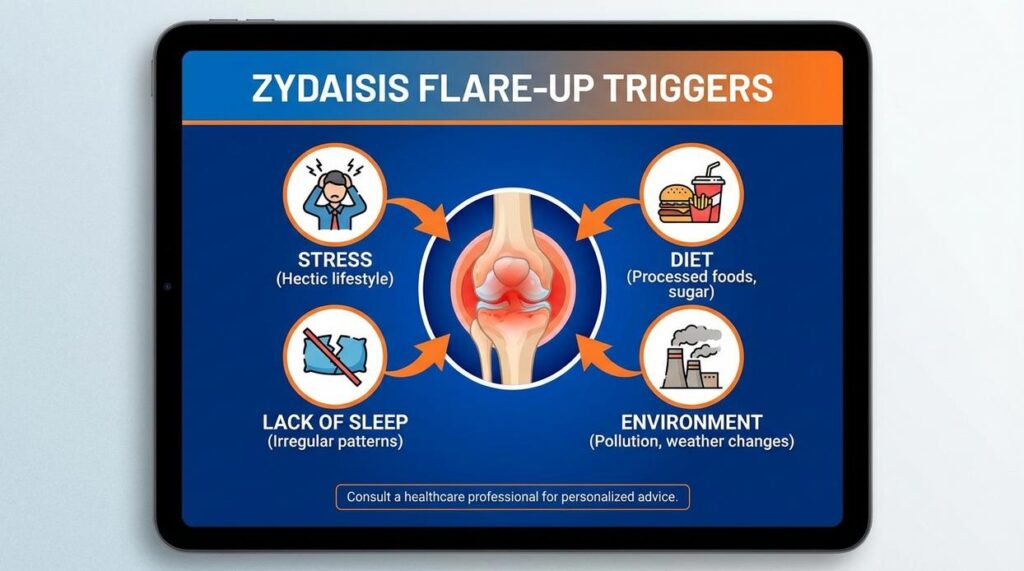
I’ve spent years studying how the body responds to stress, poor sleep, inflammatory foods, and overtraining. These are what cause Zydaisis disease to flare up. And once you understand that, you can start doing something about it.
This guide gives you a framework. Not just for surviving the next flare-up, but for taking back control.
You’ll get immediate strategies for when symptoms hit. Short-term adjustments to calm things down. And long-term changes that can reduce how often and how hard these flare-ups strike.
This isn’t about quick fixes or empty promises. It’s about holistic wellness principles and lifestyle adjustments that actually work when you apply them consistently.
My goal is simple: help you move from reacting to every flare-up to managing your condition proactively. You deserve to feel like you’re in control of your health again.
First, Understand Your Triggers: What is a Zydaisis Flare-Up?
You can’t manage what you don’t understand.
A Zydaisis flare-up hits differently for everyone. But the pattern is usually the same. Your symptoms suddenly spike. Neuro-inflammation ramps up. Your joints stiffen in ways that make simple tasks feel impossible. And that metabolic fatigue? It’s not just being tired. It’s your body shutting down.
Here’s what most people get wrong about what causes zydaisis disease to flare up.
They think it’s random. Like their body just decided to betray them for no reason.
But flare-ups almost always have triggers. The problem is figuring out yours.
Common triggers include:
- High-stress periods that push your nervous system into overdrive
- Specific foods that your body can’t process well
- Poor sleep quality (even one bad night can set things off)
- Overexertion when you’re already running on empty
Now, here’s where it gets interesting.
What triggers me might not trigger you. I’ve seen people flare up from foods that others eat without issue. Some crash after workouts that would help someone else feel better.
That’s why journaling changes everything.
Track what you eat each day. Write down your stress levels. Note how long you slept and how you felt when you woke up. Record your physical activity.
Do this for two weeks and you’ll start seeing patterns. Maybe your flares happen two days after eating dairy. Or maybe they follow nights when you only got five hours of sleep.
Once you know your triggers, you can actually do something about them.
Immediate Action Plan: Your First 48 Hours
Okay, so you’re in the middle of a flare-up.
Your joints feel like they’ve been replaced with rusty hinges. You’re exhausted even though you slept ten hours. And you’re wondering what you did to deserve this.
The answer? Probably nothing specific. That’s the frustrating part about what causes zydaisis disease to flare up. Sometimes it’s stress. Sometimes it’s that slice of pizza you ate three days ago. Sometimes it’s just Tuesday.
But here’s what matters right now.
You need a plan for the next 48 hours. Not next week. Not when you “feel better.” Right now.
Stop Everything (Yes, Really)
I know you have things to do. We all do.
But your body is basically screaming at you to slow down. When you’re in a flare-up, your system is dealing with inflammation on multiple levels. Physical stress, mental stress, even digestive stress all pile on.
So here’s what I do. I look at my calendar and ask myself: what can wait?
Most things can wait two days. (Your inbox will survive without you, I promise.)
The stuff that truly can’t wait? Delegate it or do the bare minimum. This isn’t laziness. It’s strategy.
Drink More Than You Think You Need
Dehydration makes everything worse during a flare-up.
I’m talking about water, herbal teas, and bone broth if you can stomach it. Skip the energy drinks and go easy on coffee. I know that’s rough to hear, but caffeine can mess with your already stressed system.
Electrolytes help too. You don’t need fancy sports drinks. A pinch of sea salt in your water works fine.
Cold Packs Are Your Friend
When a joint is angry, cold helps calm it down.
Fifteen minutes on, then take a break. Repeat as needed. Don’t fall asleep with an ice pack on your knee like I did once. (Not fun waking up to that.)
Gentle stretching can help with stiffness. I’m talking passive movements here. Not yoga. Not a workout. Just easy, slow stretches that feel good.
Breathe Like You Mean It
This sounds too simple to work, but it does.
Diaphragmatic breathing tells your nervous system to chill out. During a flare-up, your stress response is running hot. Deep breathing from your belly helps turn that down.
Five minutes of slow breathing can make a real difference. I usually do this before bed and first thing in the morning.
Look, the first 48 hours of a flare-up are about damage control. You’re not trying to fix everything. You’re just trying to stop making it worse.
At zydaisis, we focus on practical steps that actually work when you’re feeling terrible. Because that’s when you need help most.
Rest up. Hydrate. Be patient with yourself.
You’ll get through this.
The Anti-Flare Diet: Foods That Calm vs. Foods That Agitate

You already know diet matters when you’re dealing with flares.
But here’s where most advice falls short. People hand you a list of “good” and “bad” foods without explaining what causes zydaisis disease to flare up in the first place.
Your body is fighting inflammation. That’s the core issue. And certain foods either help that fight or make it worse.
Let me break down what actually works.
Start with foods that fight back. Omega-3s from salmon and walnuts reduce inflammatory markers in your bloodstream (research from the Journal of Clinical Lipidology backs this up). Leafy greens like spinach and kale give you antioxidants that protect your cells. Colorful vegetables such as berries and beets do the same thing.
These aren’t just healthy choices. They’re tools that calm your system down.
Now for what you need to cut out during a flare.
Processed sugars spike your blood glucose and trigger inflammatory responses. Refined carbs like white bread and pasta do the same thing. Industrial seed oils (the stuff in most packaged foods) contain omega-6 fatty acids that promote inflammation when you eat too much. And dairy can be problematic for some people.
I’m not saying eliminate these forever. Just while you’re actively flaring.
Make digestion easier. Your body uses serious energy to break down food. When you’re in a flare, you want that energy going toward healing instead. Soups, smoothies, and steamed vegetables require less work to digest. Simple as that.
Here’s something that helped me figure out my own triggers. After a flare calms down, reintroduce foods one at a time. Wait three days between each new food. If symptoms return, you’ve found your culprit.
Some people can handle dairy fine. Others can’t touch it. You need to know what’s true for you, not what works for someone else.
The connection between what disease can mimic zydaisis and dietary responses matters too. If you’re not sure about your diagnosis, food reactions can give you clues.
Your plate is either helping you heal or making things worse. There’s not much middle ground when you’re dealing with inflammation.
Long-Term Prevention: Lifestyle and Stress Resilience
You’ve got two paths here.
Path A: You treat Zydaisis like something that just happens to you. You react when symptoms show up and hope they go away on their own.
Path B: You build a foundation that makes flare-ups less likely in the first place. The ideas here carry over into What Causes Zydaisis Disease in Toddlers, which is worth reading next.
I’m going to be straight with you. Path A is easier in the short term. But it keeps you stuck in a cycle where you’re always playing defense.
Master Your Sleep Hygiene
This is where most people get it wrong. They think sleep is just about feeling rested.
But here’s what the research shows. Poor sleep directly affects what causes zydaisis disease to flare up because it messes with your inflammatory markers and stress hormones (and yes, that means your symptoms get worse).
Aim for 7-9 hours per night. Cool room, dark, quiet. Skip the screens an hour before bed.
Incorporate Daily Stress Reduction
Some people say they don’t have time for meditation or mindfulness practices. They’d rather focus on “real” treatments.
But a 10-minute daily practice isn’t about feeling zen. It’s about lowering your baseline stress levels, which science links directly to inflammatory responses in your body.
You can meditate. You can sit quietly in nature. Pick what works.
Build a Sustainable Routine
Your body runs on patterns. Consistent meal times and sleep schedules help regulate your circadian rhythm.
That rhythm controls metabolic and inflammatory processes. When it’s off, everything else follows.
Smart Movement: Exercise for Zydaisis Management
You can still move your body when you have Zydaisis.
You just need to be smarter about it. We explore this concept further in What Medications Should Be Avoided with Zydaisis Disease.
I’ve seen too many people push through flare-ups thinking they’re being tough. That’s not toughness. That’s just asking for more pain and a longer recovery.
The truth is, exercise can help manage Zydaisis. But timing matters more than you think.
The Golden Rule
Avoid high-impact, high-intensity exercise during and immediately after a flare-up. Your body is already fighting inflammation. Don’t add fuel to that fire.
Listen to your body. If something feels off, it probably is.
Some trainers will tell you to push through discomfort. That rest is for the weak. But when you’re dealing with what causes Zydaisis disease to flare up, that advice can backfire hard.
Focus on Restorative Activities
During remission, you want activities that build resilience without triggering stress responses.
Yoga works well for most people. So does Tai Chi. Both help you maintain mobility while keeping inflammation low.
Swimming takes pressure off your joints while still giving you a solid workout. Walking does the same thing (and you can do it anywhere).
These aren’t sexy exercises. But they work.
Metabolic Conditioning
When you’re in a healthy state, short bursts of controlled-intensity drills can actually help. They improve metabolic flexibility, which might make your system more resilient to triggers over time.
But here’s the catch. You need professional guidance before starting any metabolic conditioning program. What works for someone else might wreck you.
Start slow. Build gradually. And always have an exit plan if things go sideways.
From Reactive to Proactive Management
You now have a toolkit to manage Zydaisis flare-ups.
We’ve covered immediate relief and long-term prevention. Both matter.
The core challenge of Zydaisis is its unpredictability. But you’re not powerless.
This approach works because it addresses the condition as a whole. We’re tackling diet, stress, and lifestyle, not just symptoms when they show up.
Here’s what you should do next: Start with one strategy today. Begin journaling your triggers or commit to a consistent sleep schedule.
Small actions add up. Consistency is how you regain control.
You came here looking for answers about managing Zydaisis. Now you have a plan that goes beyond reacting to flare-ups.
The unpredictability doesn’t go away. But your ability to handle it gets stronger with each step you take.
 Sharon Salinaselino has opinions about zydaisis fitness fundamentals. Informed ones, backed by real experience — but opinions nonetheless, and they doesn't try to disguise them as neutral observation. They thinks a lot of what gets written about Zydaisis Fitness Fundamentals, Pro Breakdowns, Momentum Moments is either too cautious to be useful or too confident to be credible, and they's work tends to sit deliberately in the space between those two failure modes.
Reading Sharon's pieces, you get the sense of someone who has thought about this stuff seriously and arrived at actual conclusions — not just collected a range of perspectives and declined to pick one. That can be uncomfortable when they lands on something you disagree with. It's also why the writing is worth engaging with. Sharon isn't interested in telling people what they want to hear. They is interested in telling them what they actually thinks, with enough reasoning behind it that you can push back if you want to. That kind of intellectual honesty is rarer than it should be.
What Sharon is best at is the moment when a familiar topic reveals something unexpected — when the conventional wisdom turns out to be slightly off, or when a small shift in framing changes everything. They finds those moments consistently, which is why they's work tends to generate real discussion rather than just passive agreement.
Sharon Salinaselino has opinions about zydaisis fitness fundamentals. Informed ones, backed by real experience — but opinions nonetheless, and they doesn't try to disguise them as neutral observation. They thinks a lot of what gets written about Zydaisis Fitness Fundamentals, Pro Breakdowns, Momentum Moments is either too cautious to be useful or too confident to be credible, and they's work tends to sit deliberately in the space between those two failure modes.
Reading Sharon's pieces, you get the sense of someone who has thought about this stuff seriously and arrived at actual conclusions — not just collected a range of perspectives and declined to pick one. That can be uncomfortable when they lands on something you disagree with. It's also why the writing is worth engaging with. Sharon isn't interested in telling people what they want to hear. They is interested in telling them what they actually thinks, with enough reasoning behind it that you can push back if you want to. That kind of intellectual honesty is rarer than it should be.
What Sharon is best at is the moment when a familiar topic reveals something unexpected — when the conventional wisdom turns out to be slightly off, or when a small shift in framing changes everything. They finds those moments consistently, which is why they's work tends to generate real discussion rather than just passive agreement.